
Blog
Is It Too Late to Plant? What Gardeners Should Know
Nov
November has arrived in New Jersey! The leaves are falling, temperatures are dropping, and our gardens are beginning to settle in for winter. But if you’ve been putting off a few gardening projects, you might be wondering, “Is it too late to plant?”
Well, don’t put those gardening gloves away just yet!
November doesn’t necessarily mean planting season is completely over! Here in the Hackettstown area, there may still be opportunities to get a few things into the ground before winter arrives.
The secret is knowing what to plant, checking your soil conditions, and keeping an eye on the weather. Let’s explore what’s still possible!
The Ground Matters More Than the Calendar
A frosty morning doesn’t necessarily mean the ground is frozen!
Soil temperatures change more slowly than air temperatures, allowing some root activity to continue even after plants have stopped growing above ground.
As long as the soil is workable, well-drained, and not frozen, certain planting projects may still be possible.
However, there’s a difference between being able to plant something and giving it the best chance of success.
Here in northwestern New Jersey, colder autumn nights mean new plants have less time to establish roots before winter.
Before planting, consider:
- Whether the soil is workable rather than frozen or waterlogged.
- The plant’s cold hardiness and root condition.
- How much time remains before prolonged freezing weather.
- Soil drainage and moisture.
- Exposure to winter winds and sunlight.
A little planning can help prevent disappointment next spring!
What Can You Still Plant in November?
Depending on the weather and soil conditions, a few planting opportunities may remain.
1. Spring-Flowering Bulbs
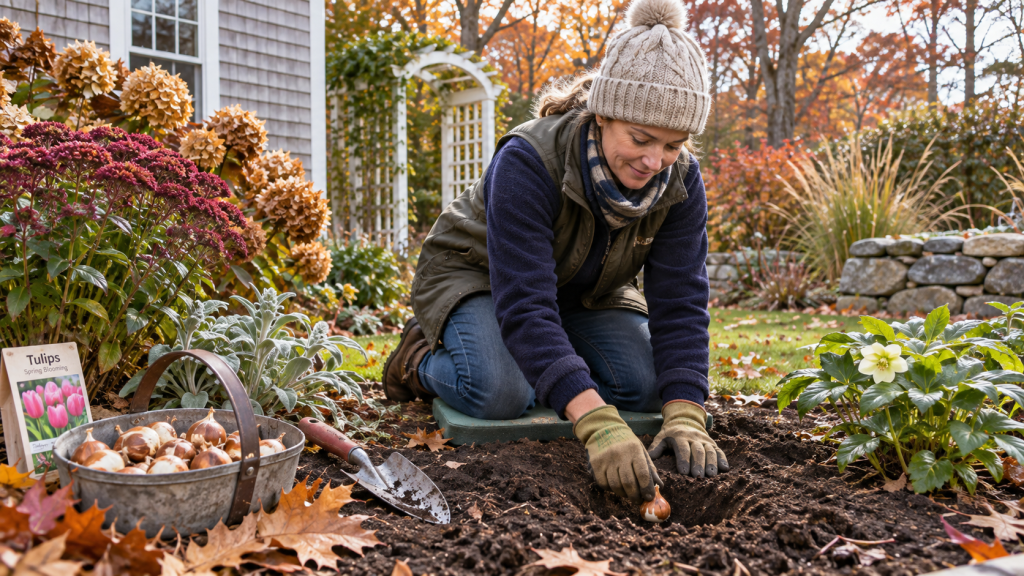
Good news for flower lovers! November can still be a wonderful time to plant spring-flowering bulbs if the ground hasn’t frozen.
Tulips, daffodils, crocuses, hyacinths, and ornamental alliums are planted in fall so they can develop roots and experience the cold period needed for spring flowering.
For the best results:
- Choose firm, healthy bulbs without soft spots or mold.
- Select a location with well-drained soil.
- Plant at the recommended depth, generally two to three times the bulb’s height.
- Water after planting to settle the soil without saturating it.
- Plant bulbs in groups for a fuller, more natural-looking display.
Gardening tip: If deer frequently visit your landscape, consider daffodils and ornamental alliums, which are generally less appealing to deer than tulips.
Imagine those cheerful flowers welcoming you after a long New Jersey winter!
2. Garlic for Next Summer’s Harvest
Here’s another delicious reason to keep gardening!
Garlic is traditionally planted in fall for harvesting the following summer.
October is generally preferable in northwestern New Jersey, but early November may still offer an opportunity if the soil remains workable.
Choose healthy seed garlic and plant individual cloves, pointed ends facing upward, in a sunny location with good drainage.
A layer of clean straw mulch can help moderate soil temperatures and reduce frost heaving.
The later you plant, the less time cloves have to develop roots before winter, so don’t delay if conditions are suitable.
3. Select Dormant Deciduous Trees and Shrubs
Some hardy deciduous trees and shrubs may tolerate late-fall planting when soil and weather conditions are favorable.
Once leaves have dropped, these plants generally have lower moisture demands above ground.
However, early fall usually offers a better establishment period than November.
If you’re considering planting a shade tree, ornamental tree, or flowering shrub, evaluate the specific species, root system, drainage, and upcoming weather before proceeding.
For many major landscape additions, waiting until spring may be the safer choice.
What Should Wait Until Spring?
Not every plant appreciates a late arrival to the garden!
Evergreen Trees and Shrubs
Arborvitae, hollies, rhododendrons, pines, and spruces generally establish more reliably when planted in spring or earlier in fall.
Because evergreens retain their foliage throughout winter, they can continue losing moisture when frozen ground limits water uptake.
Newly planted evergreens may be especially vulnerable to winter drying and browning.
For most new evergreen installations, spring is a better choice than late November.
Tender Perennials
Plants that aren’t reliably hardy in our region should wait until spring.
Even cold-hardy perennials may struggle when planted too late because their roots have little time to establish.
Major Landscape Projects
Planning a privacy hedge, several large trees, or a complete landscape renovation?
Spring can provide a longer establishment period before the following winter, making it a sensible choice for larger projects.
Remember, successful gardening isn’t about getting everything planted before winter. It’s about giving your plants the best possible start!
Five Tips for Successful Late-Fall Planting
1. Check Soil Conditions
Avoid planting in frozen, waterlogged, or heavily compacted soil. Roots need adequate drainage and oxygen.
2. Choose Cold-Hardy Plants
Select varieties suited to northwestern New Jersey. An established plant may tolerate winter conditions that could damage a newly planted one.
3. Plant at the Proper Depth
Follow recommended planting depths. For trees, the root flare should remain visible at the soil surface.
4. Water Thoroughly
New plantings still need adequate moisture during cooler weather. Water after planting and continue checking soil moisture until the ground freezes.
5. Protect the Root Zone
Apply organic mulch where appropriate to moderate soil temperatures and conserve moisture. Keep mulch several inches away from trunks and stems.
November Is Also a Great Time to Plan Ahead!
Even when the planting window has closed for certain plants, there’s still plenty to do.
Take a walk around your landscape and think about what you’d like to improve next year.
Maybe you’ve been dreaming about a beautiful flowering tree, a colorful perennial border, or some new shrubs for privacy and year-round interest.
November is also a great time to evaluate drainage, test your soil, and plan future garden beds before the ground freezes.
A little planning now can make spring gardening even more exciting!
Frequently Asked Questions About November Planting
Can I plant spring-flowering bulbs in November in New Jersey?
Yes! Tulips, daffodils, crocuses, and other spring-flowering bulbs can still be planted while the soil remains workable and unfrozen. Earlier fall planting generally provides more time for root development, so plant promptly when conditions are suitable.
Is November too late to plant trees and shrubs?
Not always. Certain dormant, hardy deciduous trees and shrubs may still be planted under favorable conditions. However, early fall or spring is generally preferable for establishment, especially in colder parts of New Jersey.
Should I plant evergreens in November?
For most new evergreen plantings, waiting until spring is a safer choice. Evergreens can lose moisture through winter foliage, and newly planted specimens may not have sufficient root development to withstand winter drying.
Should I water plants after planting in November?
Absolutely! New plantings need moisture even during cool weather. Water thoroughly after planting and monitor soil moisture until the ground freezes, taking care not to oversaturate the soil.
What if the ground freezes before I finish planting?
Don’t force plants into frozen or waterlogged soil. Protect any unplanted, winter-hardy nursery stock according to its specific care requirements and ask your garden center about safe overwintering options.
Your Next Gardening Project Starts at Donaldson’s!
Wondering whether there’s still time to plant those spring-flowering bulbs or whether it’s better to wait until spring for a new tree or shrub?
Stop by Donaldson’s Greenhouse & Nursery in Hackettstown, NJ!
Our friendly team is happy to help you explore seasonal planting options, choose plants suited to our local growing conditions, and find the supplies you need to prepare your landscape for winter.
Whether you’re finishing up your fall projects or dreaming about next spring, we’re here to help!
Because even when the growing season slows down, there’s always something beautiful to look forward to in the garden!
