
Blog
The Secret Life of Your Garden in Winter
Nov
As November settles into northwestern New Jersey, our gardens begin to look a little quieter. Flowers have faded, trees have shed their leaves, and the landscape is preparing for another chilly winter.
But here’s a little gardening secret: Your garden isn’t nearly as asleep as it looks!
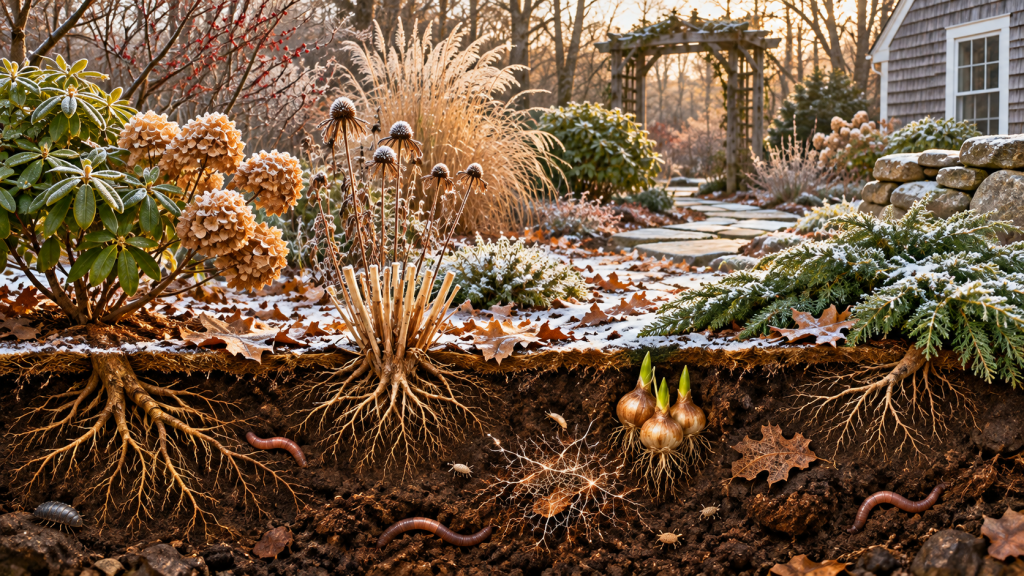
Beneath the soil, among fallen leaves, and inside seemingly lifeless plants, an amazing world of activity and survival is taking place.
From hardworking roots to tiny beneficial insects, nature has some remarkable ways of getting through the coldest months.
Let’s explore what’s really happening in your winter garden!
1. Plant Roots Are Still Alive Underground
Just because a plant has stopped growing above ground doesn’t mean everything beneath the surface has stopped, too!
Many trees, shrubs, and perennials can continue limited root growth while soil temperatures remain favorable.
Here in Hackettstown, the soil may remain unfrozen after the first frosty mornings, allowing some roots to continue developing.
Healthy roots are essential for supporting new growth when spring returns.
As temperatures drop further, root activity slows considerably. Plants conserve their resources and wait for warmer growing conditions.
Some hardy roots survive well below the surface, where temperatures are more stable than the air above.
That’s also why proper fall watering and mulching can be especially beneficial for newly planted trees and shrubs.
2. Tiny Organisms Are Keeping Your Soil Healthy
Believe it or not, your garden soil is home to an incredible community of living organisms!
Beneficial bacteria, fungi, earthworms, and other small creatures help break down organic materials, recycle nutrients, and improve soil structure.
During warmer weather, this underground community can be especially active.
When winter arrives, much of that activity slows. However, some microorganisms can continue working whenever soil temperatures and moisture conditions allow.
Earthworms may move deeper into the soil to avoid freezing conditions, while beneficial fungi can survive winter within the soil and around plant roots.
Even when your garden looks quiet, the soil is still a living ecosystem!
3. Beneficial Insects Have Secret Winter Hideouts
Ever wonder where butterflies, native bees, lady beetles, and other helpful insects go when the weather turns cold?
You might be surprised to learn that many spend winter right in your own backyard!
Depending on the species, beneficial insects may shelter:
- Beneath fallen leaves.
- Inside hollow or pithy plant stems.
- Under loose tree bark.
- In underground nests and burrows.
- Among dried grasses and perennial plants.
Some survive winter as adults, while others overwinter as eggs, larvae, or pupae.
For example, bumblebee queens may spend winter in protected underground locations beneath leaf litter, while certain butterflies and moths overwinter among fallen leaves.
That’s one excellent reason not to make your garden too tidy before winter!
Leaving some natural shelter helps these important garden visitors survive until warmer weather returns.
4. Fallen Leaves Are Nature’s Winter Blanket
Those beautiful autumn leaves do more than create colorful scenery!
Once they fall to the ground, healthy leaves can become valuable protection for your garden.
A layer of fallen leaves helps insulate the soil, conserve moisture, and provide shelter for beneficial organisms.
As leaves gradually decompose, they contribute organic matter that can improve soil structure over time.
Instead of removing every leaf, consider leaving some in garden beds or beneath shrubs.
Just remember to remove thick, matted leaf accumulations from lawns to prevent smothering the grass.
And remove diseased plant material where appropriate to help reduce problems during the next growing season.
Sometimes a slightly less-than-perfect garden is exactly what nature needs!
5. Dormant Plants Are Preparing for Their Spring Comeback
Have you ever wondered how perennials can disappear during winter and then return as if nothing happened?
It’s one of nature’s most remarkable survival strategies!
Many hardy perennials survive the colder months through underground roots, crowns, bulbs, and rhizomes that store energy and protect living tissues.
Dormancy allows plants to conserve resources while waiting for more favorable growing conditions.
As daylight shortens and temperatures drop, plants undergo natural changes that increase their cold tolerance.
Above ground, they may appear completely lifeless.
But beneath the surface, they hold the potential for beautiful new growth when spring arrives!
6. Spring Bulbs Are Preparing for Their Big Debut
Here’s something especially exciting for flower lovers!
Some of next spring’s most beautiful blooms are already preparing for their big reveal underground.
Fall-planted tulips, daffodils, crocuses, and hyacinths begin developing roots when soil conditions are favorable.
They then experience the cold period required for normal spring growth and flowering.
As temperatures warm and daylight increases, those hidden bulbs begin sending up their colorful blooms.
Imagine cheerful daffodils, bright crocuses, and beautiful tulips appearing after months of chilly New Jersey weather!
It’s a wonderful reminder that even when your garden looks quiet, something beautiful may be waiting beneath the surface.
7. Your Winter Garden Supports Wildlife
Your garden isn’t just helping plants and insects survive winter. It can also provide food and shelter for birds and other wildlife.
Standing coneflower and black-eyed Susan seed heads may attract goldfinches and other seed-eating birds.
Evergreen trees and shrubs provide protective cover from winter winds, while native berry-producing plants may offer natural food sources.
Fallen leaves also provide habitat for insects and other small creatures that birds may forage for.
A wildlife-friendly winter garden doesn’t have to be perfectly manicured to be beautiful!
How Can You Help Your Winter Garden?
Supporting all this hidden life is surprisingly simple.
Leave Some Leaves
Allow healthy fallen leaves to remain in garden beds where appropriate. They provide natural insulation and shelter for beneficial organisms.
Keep Some Stems Standing
Dried perennial stems and seed heads can offer winter habitat for insects and food for birds.
Protect the Soil
Organic mulch helps conserve moisture and moderate soil temperatures. Keep mulch away from plant crowns and tree trunks.
Avoid Unnecessary Digging
Disturbing winter garden beds can disrupt soil structure and organisms sheltering beneath the surface.
Water When Needed
Newly planted trees, shrubs, and evergreens may still need supplemental watering during dry weather before the ground freezes.
Plan for Next Spring
Use the quieter season to dream about new flowers, native plants, and wildlife-friendly landscaping projects.
Frequently Asked Questions About Winter Gardens
Is my garden soil really alive during winter?
Yes! Soil contains bacteria, fungi, earthworms, and other organisms that survive winter in different ways. Much of their activity slows in the cold, but certain organisms remain active whenever conditions allow.
Should I remove all fallen leaves before winter?
No. Healthy leaves can provide valuable shelter for beneficial insects and help insulate soil. Remove thick leaf accumulations from lawns and manage diseased debris, but consider leaving leaves in suitable garden beds.
Do beneficial insects survive freezing temperatures?
Many do! Depending on the species, insects survive winter in protected locations as adults, eggs, larvae, or pupae. Undisturbed leaf litter and standing plant stems can provide important shelter.
Are perennial plants dead when they disappear in winter?
Not necessarily. Many hardy perennials die back above ground but survive through living roots, crowns, bulbs, or rhizomes. These structures can produce new growth when spring arrives.
Should I cut down all my perennial stems in fall?
Not always. Leaving sturdy, healthy stems standing can provide overwintering habitat for insects and food for birds. Remove diseased material as needed, and save some cleanup for spring.
Your Garden Is Never Really Asleep!
Winter may seem like the quietest season in the garden, but beneath the surface, nature is doing some incredible work.
From roots conserving energy to beneficial insects finding shelter and spring bulbs preparing to bloom, your landscape is filled with hidden life and future possibilities.
And sometimes, the best thing you can do is simply give nature a little space to work its magic!
Want to create a healthier, more wildlife-friendly garden?
Stop by Donaldson’s Greenhouse & Nursery in Hackettstown, NJ!
Our friendly team can help you explore seasonal gardening ideas, discover plants suited to northwestern New Jersey, and find inspiration for your landscape throughout the year.
Because even when your garden looks like it’s sleeping, nature is still working its magic!
