
Blog
Why Your Evergreens Turn Brown in Winter
Nov
Evergreens are supposed to stay green all year, right? So why do some of them suddenly turn brown when winter arrives?
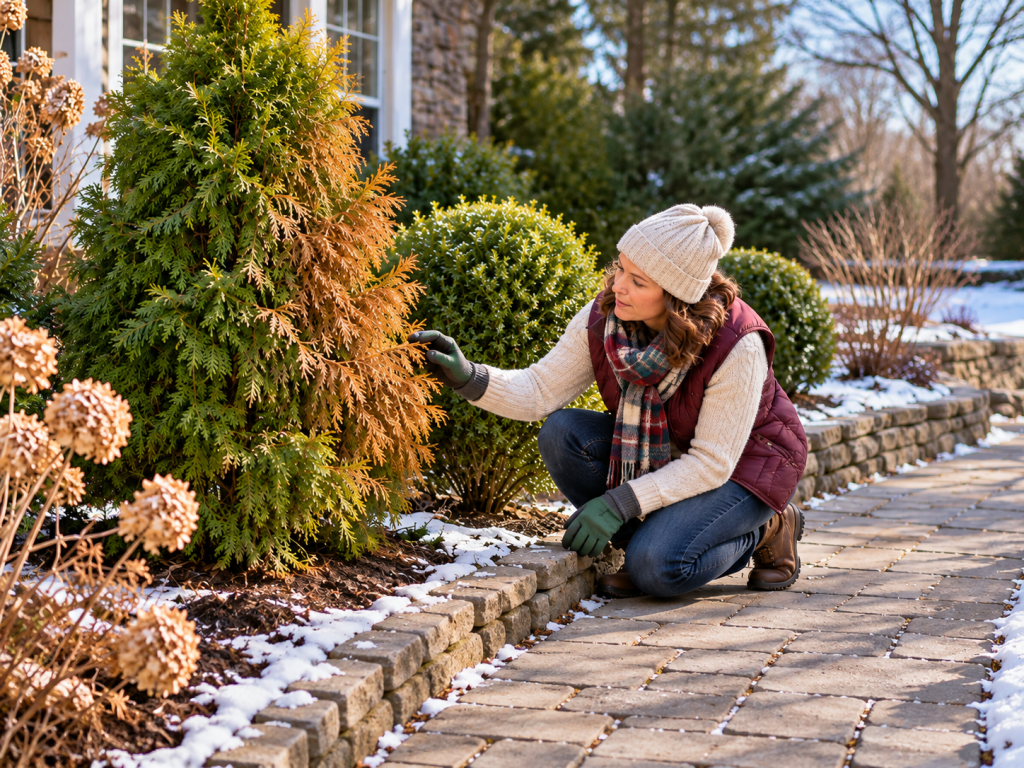
If you’ve ever noticed brown needles on your arborvitae, discolored boxwoods, or crispy-looking rhododendron leaves, you might have wondered whether your plants were sick or dying.
Here’s some good news: Brown foliage doesn’t always mean your evergreen has a disease, and it doesn’t necessarily mean the entire plant is dead!
One common cause of winter browning is a condition called winter burn. Understanding why it happens and how to prevent it can help keep your landscape looking beautiful throughout the colder months.
What Is Winter Burn?
Despite its name, winter burn has nothing to do with heat or fire!
Winter burn occurs when evergreen foliage loses more moisture than the plant’s roots can replace.
Unlike deciduous trees that drop their leaves in fall, evergreens retain their needles or leaves throughout winter.
Even during cold weather, they continue losing small amounts of moisture through their foliage.
The trouble begins when the ground freezes.
Frozen soil limits the roots’ ability to absorb water. Add bright winter sunshine, drying winds, and fluctuating temperatures, and evergreen foliage may lose moisture faster than it can be replenished.
The result can be brown, dried-out needles and leaves.
Here in Hackettstown and northwestern New Jersey, cold winter winds and freezing temperatures can make this a particular concern for exposed evergreens.
Which Evergreens Are Most Vulnerable?
While nearly any evergreen can experience winter injury, some deserve extra attention.
Plants to keep an eye on include:
- Arborvitae: Particularly newly planted plants and those growing in exposed, windy locations.
- Boxwoods: May develop bronze, yellow, or brown foliage following harsh winter weather.
- Rhododendrons: Broad leaves may curl, brown along the edges, or develop dry patches.
- Hollies: Broadleaf varieties may experience winter leaf scorch.
- Yews: Can develop brown needles after exposure to winter sunlight and wind.
- Pines and Spruces: May show brown needle tips or larger areas of winter injury following severe conditions.
Newly planted evergreens are especially vulnerable because their root systems haven’t had enough time to become fully established.
How to Recognize Winter Burn
Winter burn doesn’t always show up immediately!
Some evergreens appear healthy through December and January, only to develop brown foliage in late winter or early spring.
Common signs include:
- Brown, reddish-brown, or bleached foliage.
- Browning that begins at leaf or needle tips.
- Damage concentrated on the south or southwest side of the plant.
- More severe discoloration on branches exposed to sunlight and wind.
- Healthier foliage on branches protected by snow or nearby structures.
One helpful clue: Winter burn often affects exposed outer foliage more severely than protected inner branches.
However, browning can also result from drought, poor drainage, salt exposure, pests, or disease.
The timing and pattern of damage can help identify the problem.
Don’t Confuse Winter Burn With Natural Needle Drop
Here’s something that surprises many gardeners!
Evergreens don’t keep every needle forever.
Many needled evergreens naturally shed older foliage as part of their normal growth cycle.
Pines, arborvitae, and other conifers may develop yellow or brown needles toward their interiors, especially during fall.
These older needles eventually drop while healthy new growth remains on the outside.
If browning occurs primarily on older interior foliage and the outer branches remain green, it may simply be normal seasonal shedding.
Five Ways to Protect Evergreens From Winter Burn
The best defense against winter injury begins before the coldest weather arrives.
1. Water Before the Ground Freezes
Proper fall watering is one of the most effective ways to help reduce winter drying.
Evergreens need adequate soil moisture heading into winter, especially during a dry autumn.
Check the soil several inches below the surface. If it feels dry, water slowly and thoroughly so moisture reaches the root zone.
Continue monitoring soil moisture during dry weather until the ground freezes.
Avoid overwatering or leaving roots in waterlogged soil.
Gardening tip: Pay extra attention to evergreens planted within the last few years. Their root systems may still be developing.
2. Add a Protective Layer of Mulch
Mulch isn’t just for making garden beds look neat!
A 2 to 3-inch layer of organic mulch can help conserve soil moisture and moderate temperature fluctuations around plant roots.
Shredded bark, wood chips, and other suitable organic mulches are good choices.
Spread mulch over the root zone, but keep it several inches away from trunks and stems.
Avoid piling mulch directly against the bark, which can trap moisture and contribute to decay.
3. Shield Plants From Winter Wind and Sun
Some vulnerable evergreens benefit from extra protection when winter weather turns harsh.
Burlap screens can help reduce exposure to drying winds and intense winter sunlight.
Install stakes around exposed plants and attach burlap to create a protective barrier on the most vulnerable sides.
Leave space between the burlap and foliage to reduce rubbing and allow airflow.
This can be particularly helpful for young arborvitae, boxwoods, and broadleaf evergreens growing in exposed locations.
4. Avoid Late-Season Fertilizing and Heavy Pruning
Heavy applications of nitrogen fertilizer late in the growing season can encourage tender new growth that may not harden off before winter.
Heavy pruning can also expose foliage or create additional stress.
Save major pruning and routine fertilizing for the appropriate season, based on the specific plant and soil conditions.
5. Choose the Right Plant for the Right Location
One of the best ways to prevent winter injury is to select evergreens suited to your landscape.
Consider:
- Exposure to winter sunlight.
- Prevailing winds.
- Soil drainage and moisture.
- Mature plant size.
- Local cold hardiness.
- Exposure to road salt and deicing products.
Plants growing near driveways or roads may experience additional winter stress from salt spray or salty runoff.
The right evergreen in the right location can make all the difference!
Can Evergreens Recover From Winter Burn?
If your evergreens develop brown foliage, don’t rush to grab the pruning shears!
Brown needles and leaves generally won’t turn green again, but the plant may still be alive and capable of producing healthy new growth.
Wait until spring growth begins before deciding which branches are truly dead.
Living branches may produce fresh foliage that improves the plant’s appearance.
However, completely dead branches will not recover, and some evergreens cannot regrow from old, bare wood.
Keep affected plants properly watered during dry weather and avoid unnecessary stress while they recover.
If browning continues to spread or the cause isn’t clear, have the plant evaluated before making major pruning or replacement decisions.
Frequently Asked Questions About Winter Burn
Why are my arborvitae turning brown in winter?
Arborvitae can turn brown because of winter drying, drought, salt exposure, or other stresses. Winter burn occurs when foliage loses more moisture than the roots can replace. However, browning of older interior foliage in fall may simply be natural seasonal shedding.
Does brown foliage mean my evergreen is dead?
Not necessarily! Brown foliage indicates damaged or dead leaf tissue, but branches and buds may still be alive. Wait for spring growth to assess the plant before removing large sections.
Can winter burn be prevented?
You can reduce the risk by watering during dry fall weather, applying mulch correctly, and providing wind or sun protection for vulnerable plants. Choosing suitable species and planting locations also helps.
Should I cover my arborvitae with burlap?
A burlap screen may help protect exposed or newly planted evergreens from drying winds and winter sunshine. Position it around the plant rather than tightly wrapping foliage, and secure it against strong winds.
When should I prune winter-damaged evergreens?
Wait until spring growth makes it easier to identify living and dead branches. Pruning too early can remove growth that might otherwise recover.
Can road salt cause evergreen browning?
Yes. Salt spray and salty runoff can damage foliage and roots. Browning on the side facing a road or driveway may indicate salt injury rather than winter burn alone.
Keep Your Evergreens Beautiful All Year Long!
Winter can be tough on trees and shrubs, but a little preparation can go a long way toward protecting your landscape.
By keeping evergreens properly watered, mulching their roots, shielding vulnerable plants, and choosing varieties suited to local conditions, you can help reduce winter damage and encourage healthier growth next spring.
Have questions about browning evergreens or protecting your landscape from winter weather?
Stop by Donaldson’s Greenhouse & Nursery in Hackettstown, NJ!
Our friendly team is happy to help you explore evergreen varieties, find seasonal gardening supplies, and discover ways to keep your landscape healthy throughout the changing seasons.
Because evergreens should bring beautiful color to your garden, even when everything else is taking a winter break!
